

Shipping heavy equipment internationally is rarely a one-size-fits-all process. Whether you’re transporting an excavator, bulldozer, crane, mining equipment, or industrial machinery, the final transportation cost depends on much more than the equipment’s weight.
Dimensions, shipping method, destination, permits, customs requirements, and loading procedures all influence the final price. Understanding these factors can help businesses budget more accurately and avoid unexpected costs.
What Is Considered Overweight Equipment?
In international logistics, overweight equipment generally refers to machinery that exceeds standard road or shipping limits.
Examples include:
- Excavators
- Bulldozers
- Wheel loaders
- Cranes
- Asphalt pavers
- CNC machines
- Agricultural equipment
- Mining equipment
- Industrial presses
- Generators
Depending on the equipment’s dimensions, it may also be classified as oversized cargo, requiring additional handling and permits.
What Factors Affect Shipping Costs?
1. Equipment Size and Weight
The larger and heavier the equipment, the more specialized the transportation solution becomes.
Pricing is influenced by:
- Overall weight
- Length
- Width
- Height
- Center of gravity
In many cases, oversized dimensions have a greater impact on cost than weight alone.
2. Origin and Destination
Transportation costs vary considerably depending on where the equipment is being shipped.
Pricing may increase when the destination involves:
- Remote job sites
- Limited port infrastructure
- Inland delivery after ocean transport
- Seasonal accessibility
- Multiple transportation modes
A shipment between two major ports is generally less expensive than one requiring inland heavy haul transportation.
3. Customs and Import Requirements
International shipments also include administrative costs.
These may include:
- Customs clearance
- Import duties
- Taxes
- HTS code classification
- Inspection fees
- Documentation requirements
Incomplete or incorrect paperwork can result in delays and additional storage charges.
4. Loading and Unloading Requirements
Not every piece of equipment can simply be driven onto a vessel.
Some shipments require:
- Mobile cranes
- Heavy lift cranes
- Specialized rigging
- Lift engineering
- Custom lifting frames
Additional handling requirements increase both planning complexity and transportation costs.
5. Shipping Method
The type of ocean freight selected has a significant impact on pricing.
Common options include:
Shipping Method | Best For |
Container | Smaller machinery |
Flat Rack | Oversized equipment |
Open Top | Tall equipment |
Roll-on/Roll-off (RoRo) | Wheeled or tracked equipment |
Breakbulk | Extremely large machinery |
Heavy Lift Vessel | Ultra-heavy cargo |
The most economical option depends on the equipment’s size, destination, and port infrastructure.
Additional Costs to Consider
The freight rate is only one part of the total transportation budget.
Other costs may include:
- Oversized transport permits
- Escort vehicles
- Marine cargo insurance
- Port handling charges
- Warehousing
- Demurrage
- Detention fees
- Temporary storage
- Route surveys
These costs vary depending on the country, transportation route, and equipment specifications.
Can You Reduce Shipping Costs?
While oversized transportation involves specialized equipment, there are ways to improve cost efficiency.
Planning early allows more flexibility when selecting vessels and transportation schedules.
Providing accurate dimensions before requesting a quotation also helps avoid costly changes later in the project.
Whenever possible, businesses should also consider:
- Shipping multiple machines together
- Removing detachable components
- Choosing ports with oversized cargo capabilities
- Scheduling shipments outside peak seasons
Every oversized shipment presents unique challenges. Working with an experienced freight forwarder early in the planning process helps identify the most efficient transportation method, minimize risk, and avoid unnecessary costs. Learn more about our Heavy Equipment Logistics solutions.
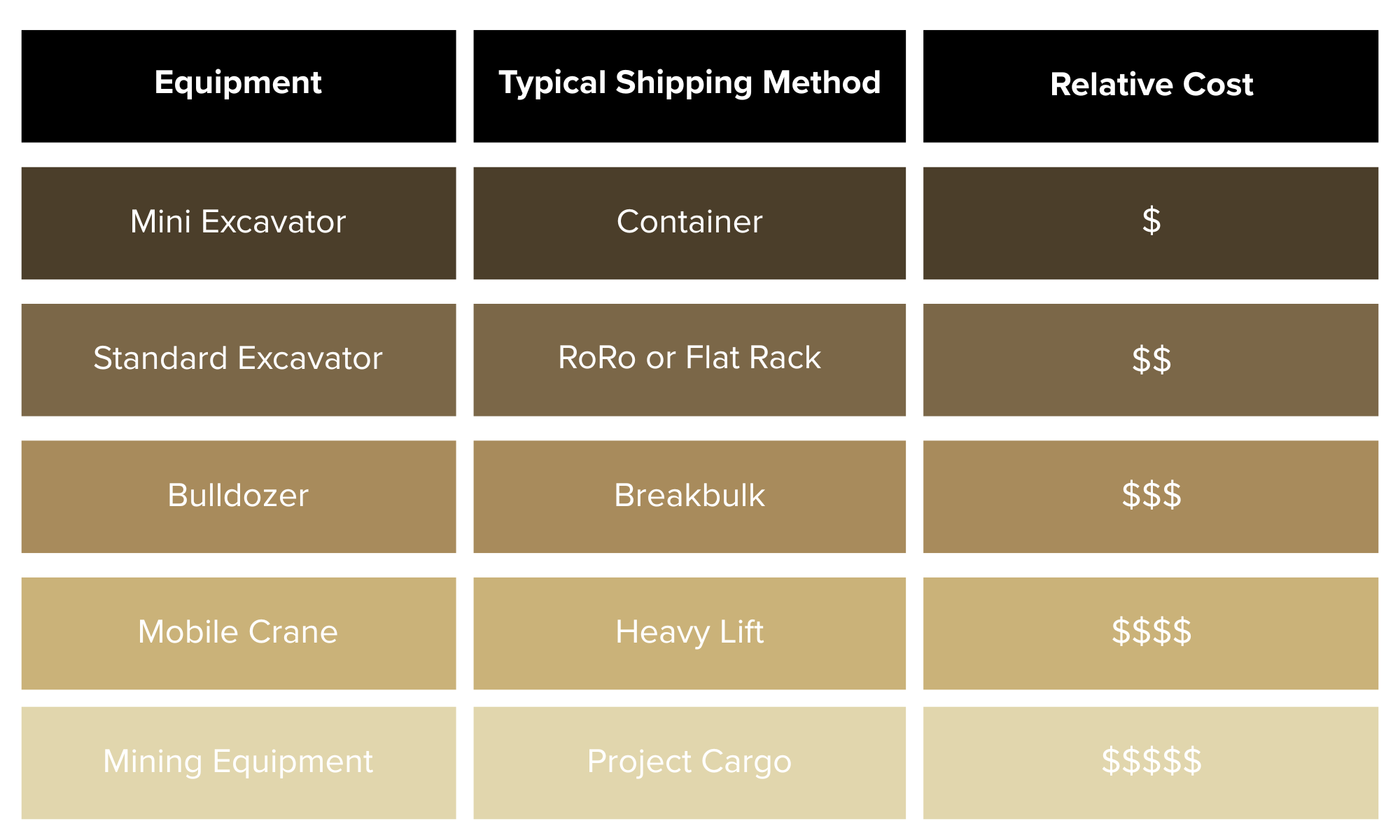
Example Cost Scenarios :
How can I get the most accurate shipping quote?
Providing the following information will help generate an accurate estimate:
- Equipment make and model
- Overall dimensions
- Weight
- Pickup location
- Delivery destination
- Required delivery date
FAQ
Is shipping cost based only on weight?
No. Dimensions, transportation method, loading requirements, permits, and destination often have a greater impact on pricing than weight alone.
Is RoRo cheaper than breakbulk?
In many cases, yes. Equipment that can be driven directly onto the vessel is generally less expensive to ship than cargo requiring crane lifts.
Can oversized equipment be shipped in a container?
Some smaller machinery can fit inside containers. Larger equipment often requires Flat Rack, Open Top, RoRo, or Breakbulk shipping.
About Falcon
International heavy equipment shipping requires more than transportation capacity. It demands careful planning, regulatory expertise, and a logistics partner that understands the complexities of oversized cargo.
For more than 20 years, Falcon International has helped manufacturers, construction companies, mining operators, and industrial businesses move heavy equipment safely and efficiently across the globe. From route planning and permits to ocean freight, customs clearance, and final delivery, we provide end-to-end logistics solutions designed to reduce risk and keep projects on schedule.
Learn more about our Heavy Equipment Logistics solutions or contact our team to discuss your next international shipment.