

How Are Wind Turbines Transported?
Wind turbines are among the largest pieces of equipment transported anywhere in the world. A single turbine is made up of several oversized components—including blades, tower sections, the nacelle, and the hub—that are manufactured separately and assembled on-site.
Because of their size and weight, these components cannot be shipped using conventional freight methods. Instead, transporting a wind turbine requires specialized trailers, heavy lift equipment, ocean freight, and detailed route planning to ensure every piece arrives safely and on schedule.
What Parts of a Wind Turbine Are Transported?
Each wind turbine is divided into several major components before transportation.
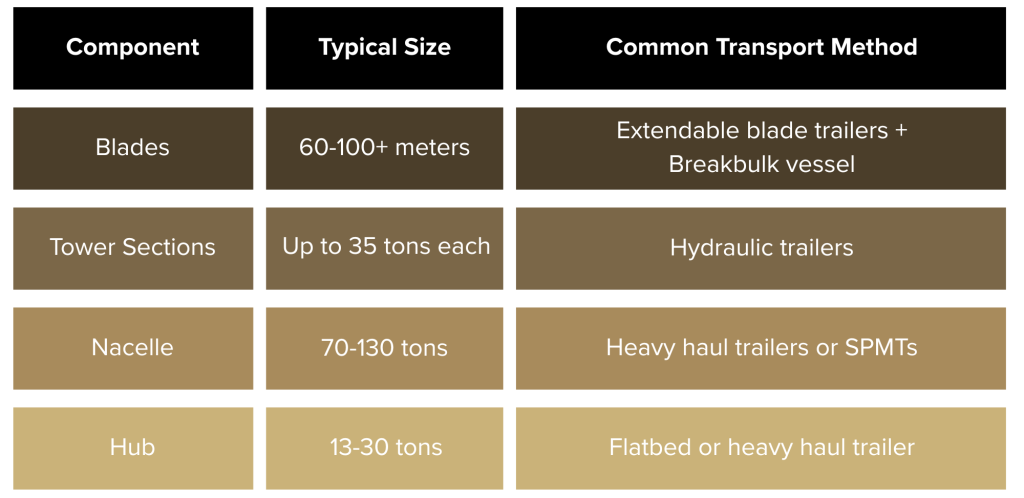
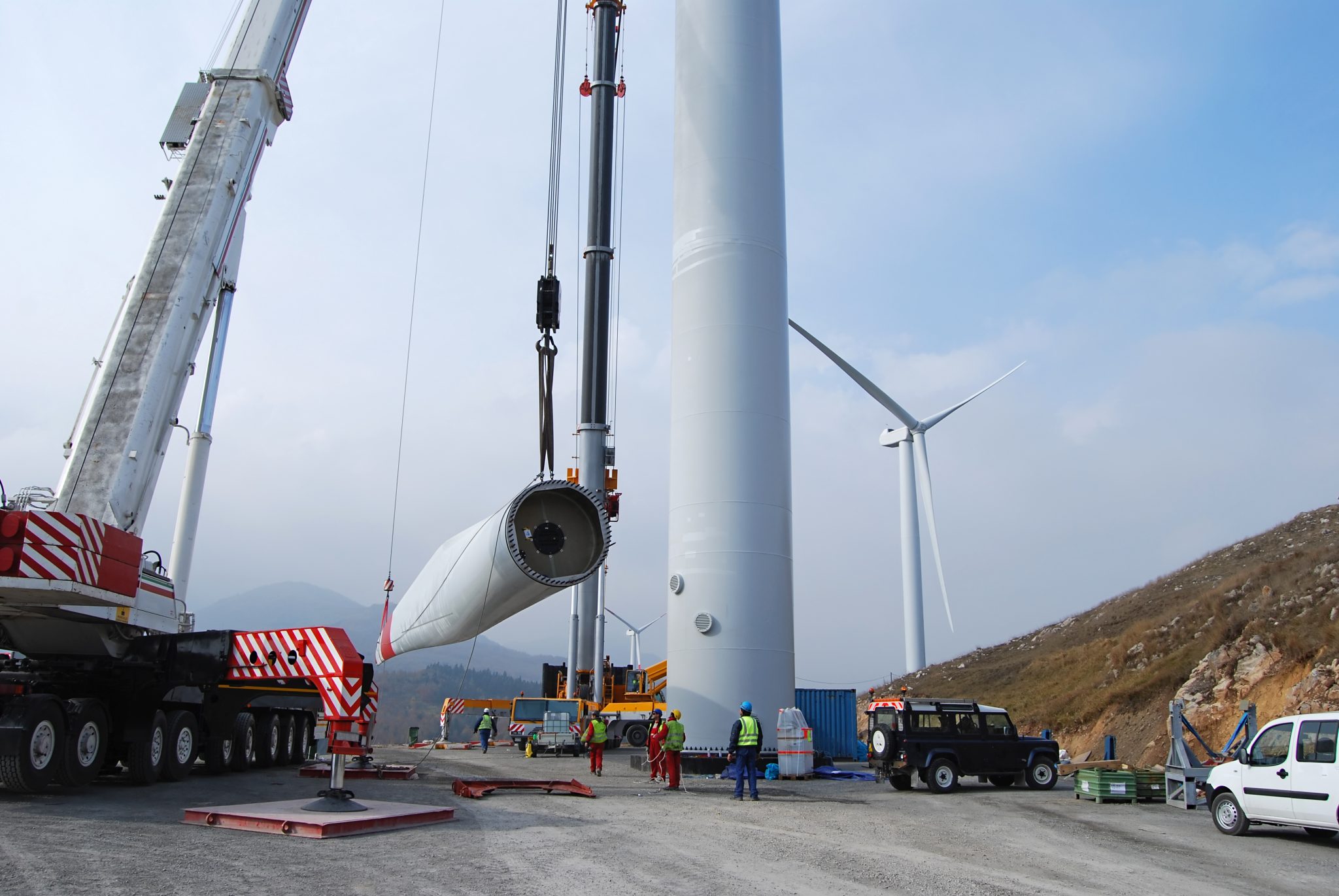
Once delivered, the turbine is assembled using heavy lift cranes at the wind farm.
How Are Wind Turbine Blades Transported?
The blades are usually the most difficult component to move because of their extreme length. Specialized extendable trailers are used to support the blade while allowing the rear axle to steer independently through tight turns.
Depending on the route, transportation may require:
- Route surveys
- Oversized load permits
- Police escorts
- Night transportation
- Temporary road closures
- Utility line lifting
- Traffic control
Some modern blade trailers can even raise the tip of the blade hydraulically to navigate steep grades or tight intersections.
How Are Wind Turbines Shipped Overseas?
Since most components exceed standard container dimensions, they are generally shipped as breakbulk cargo.
This process typically involves:
- Loading each component individually with heavy-lift cranes
- Securing cargo using engineered lashing plans
- Transporting on breakbulk or heavy lift vessels
- Unloading at ports equipped for oversized cargo
The shipping method depends on the size of the components, the destination, and the available port infrastructure.
Why Route Planning Is Critical
Before transportation begins, engineers perform a detailed route survey to identify any obstacles that could prevent the cargo from reaching its destination safely.
These surveys evaluate:
- Bridge capacities
- Road widths
- Turning radii
- Height restrictions
- Weight limits
- Construction zones
- Railway crossings
- Overhead utilities
If any restrictions are identified, the route can be modified before the shipment begins, reducing delays and improving safety.
Common Challenges During Wind Turbine Transportation
Transporting oversized renewable energy equipment presents several logistical challenges.
Some of the most common include:
- Extremely long and heavy cargo
- Remote wind farm locations
- Weather delays
- Limited road infrastructure
- Port congestion
- Crane scheduling
- Tight construction timelines
Because of these factors, transportation planning often begins months before the equipment leaves the manufacturing facility.
Working with a logistics partner experienced in renewable energy projects helps reduce risk throughout every phase of transportation. Learn more about Falcon’s Energy & Power Generation Logistics solutions for wind, solar, hydroelectric, and other large-scale infrastructure projects.
FAQ
Can wind turbines be transported in shipping containers?
No. Most wind turbine components exceed the dimensions of standard shipping containers and are transported as breakbulk or heavy lift cargo.
How long are wind turbine blades?
Most onshore wind turbine blades measure between 60 and 80 metres, while offshore blades can exceed 100 metres.
Why are oversized wind turbine loads transported at night?
Many jurisdictions restrict oversized transport during peak traffic hours. Night transportation helps reduce congestion and improves safety.
About Falcon
Transporting wind turbine components requires more than oversized transportation. It demands careful planning, engineered lifting solutions, regulatory expertise, and seamless coordination across every stage of the supply chain.
For more than 20 years, Falcon International has helped energy developers, EPC contractors, manufacturers, and infrastructure companies move oversized and heavy-lift cargo worldwide. From route surveys and permits to breakbulk shipping, heavy haul transportation, customs clearance, and final delivery, our team develops tailored logistics solutions that keep renewable energy projects moving safely and on schedule.
Learn more about our Energy & Power Generation Logistics solutions or contact our team to discuss your next renewable energy project.